



"I would like to thank you all, for all your help in our case on behalf of my family and myself, ya'll did a great job and are great persons! Thank You"
"I just want to thank you for all the hard work on my case. The case moved efficiently and everyone involved made sure my every need was met. I do want to say that Anjali Nigam was one of the best advocates I had. She was perfect in every aspect. I have a new lease on life now because of what you and The Ammons Law Firm achieved for me. Thank you, that’s all I have to try and explain how grateful I am. Thank you for fighting as hard as I fought to stay alive. – God Bless!"
"Thank you very much for all the work that you did on our behalf. I really appreciate everything that you all did, as well as your professionalism and the timely manner in which you got things done.
Also, please give our thanks to your staff who were so helpful when we had questions! If we have need of your services or if we know anyone else who does anytime in the future, we will certainly give you a call! Thank you again for everything."
"A little over two years ago I received a telephone call that all parents dread to hear. The person on the other line simply said, “Your daughter has been in an accident”. Well here I was 1500 miles away from her , trying to absorb the rest of the conversation, trying to stay focused enough to get the details. Shortly after I arrived in Texas my lovely daughter of 38 years passed away from injuries sustained from a motorcycle accident.
I won’t continue this story, however what I will say is, when things calmed down a little, I knew I must become a voice for my daughter. Though a chain of events our family was introduced to the Ammons Law Firm of Houston, Texas.
From the first initial contact with Mr. Robert Ammons and his staff, I hung up the telephone feeling as if I and my family were in good hands. We had constant contact from Ohio to Texas via the telephone and the computer for two years. The staff made all the arrangements anytime I had to fly to Texas and made sure I had comfortable accommodations while I was there.
My family and I were kept abreast of the progress for our case on a regular basis. Anytime I had any questions, the staff was polite, informative, and punctual with the answers.
I am very satisfied with the level of concern and commitment Mr. Ammons and his staff displayed from the beginning to the conclusion of our association.
I would highly recommend this law firm to anyone who might be seeking one.
Thank You Mr. Ammons and your staff."
-Candee P., Former client
Mineral Wells, Tx
"I was totally happy with Rob Ammons and the lawyers at the Ammons Law Firm. Rob Ammons went the extra mile. I am beside myself. I feel so good with the settlement they obtained."
-Christopher R., Former Client
Mt. Belvieu, Tx
-Monica S., Former Client
Miami Gardens, Fl
While airline travel gets safer every year, travel on commercial bus lines gets more hazardous. Until the government steps in to oversee the industry, lax oversight and weak regulations will continue to make bus travel unacceptably risky.
Imagine that a commercial airliner crashed somewhere in the United States, and the subsequent investigation determined that the plane had numerous safety issues: There were no seat belts and no fire extinguishers on board, the fuselage was not structurally sound, and the windows were defective. Even worse, the airline had unlawfully delayed maintenance on critical aircraft components, such as brakes and landing gear.
No one knew this, though, because the plane had never been inspected. Moreover, the airline was not licensed to carry passengers, and the pilot was flying on a suspended license due to an expired medical certificate.
It couldn’t happen, you say. Not in this country.
But if you board a bus instead of a plane, the sad reality is it can and does. Every day, Americans ride buses that lack up-to-date safety equipment and are driven by improperly trained or unlicensed drivers.1
For a variety of reasons—poor oversight, poor bus design, maintenance problems, and lax operators—the level of safety on the average bus is far from what it should be. Until steps are taken to address these problems, Americans will continue to be needlessly injured and killed in tragic bus accidents.
Unlike plane crashes, bus accidents occur frequently in America, often with catastrophic results. In recent years, several highly publicized, tragic incidents have called attention to the problem:
Why do these tragedies keep recurring with depressing regularity? The problem is twofold. First, buses are not nearly as safe as they could be. Because of political pressure, inertia, or lack of will, safety features that can increase survivability in bus accidents are not required as standard equipment on buses.
Second, the regulatory structure that is supposed to protect the traveling public is abysmal. Not only have regulators failed to require safer buses, they also aren’t enforcing the regulations that do exist. The result is an environment where bus operators and drivers feel free to operate outside the rules without fear of consequences.
Without serious changes in the industry, the problem is likely to get worse. With fuel prices likely to go up and the economy trending down, people who used to fly or drive will take buses instead. And in emergency situations, evacuations of large cities could require people to ride on the nation’s buses.
Slow on safety
Compared with safety measures in airplanes or even automobiles, advances in passenger safety have been slow to find their way onto buses. And it’s not because the technology doesn’t exist. Experts around the world have conducted extensive research and collected significant data on how to improve bus safety. But that knowledge is not being used.
There are many ways to make buses safer, but we won’t see safety improvements until the federal government forces bus manufacturers to implement them. When that does happen, certain measures should be priorities.
Seat belts
Seat belts have been standard on both airplanes and automobiles for so long that most Americans can’t recall a time when they weren’t mandatory equipment. Incredibly, though, buses are rarely equipped with them. This omission is not an accident.
Safety advocates first proposed mandating seat belts on American buses more than 30 years ago, and other countries—including Australia and most European nations—long ago made seat belts in buses a requirement. Most studies show that placing belts in buses saves lives.6
Just as they do in cars and on airplanes, seat belts in buses keep passengers in their seats during an accident. A collision or rollover subjects passengers to tremendous forces that can propel them out of their seats and slam them into the bus’s interior surfaces. These forces are usually strong enough to eject people through windows and out of the bus—which is an alarmingly frequent cause of death in bus accidents.7
Critics of mandated seat belt use say seat belts would be expensive, would add too much weight to the bus, and would be difficult to install. But it is possible to use an existing seat design that would add no weight and cost the same as seats currently used in buses.8
Stronger roofs
Any time a bus crashes, passengers’ survivability depends on the bus maintaining a “survival space” free from any encroachment by the damaged structure of the bus itself. Passengers face significant risk if the side or roof of the bus collapses. When the survival space is compromised, passengers can be severely injured.
The strength of the roof depends on its support structure, the pillars between the windows of the bus. As bus manufacturers have enlarged their vehicles’ windows for the convenience of passengers, the support structure for roofs has gotten smaller. Weaker roofs are more likely to give way in rollover and other accidents, increasing the injury risk. Mandating stronger roofs on buses would save lives.
While bus safety experts have been aware of the problem for some time, buses continue to operate under regulations that permit a bus’s roof to be less rigid than is necessary. The NTSB has identified stronger bus roofs as a top priority.9
Window glazing
Because passengers can be thrown through bus windows during an accident, safety experts have developed technology, known as ejection-resistant window glazing, to strengthen the windows. Because studies indicate that ejection is a leading cause of death in bus accidents, ejection-resistant glazing in all buses would help reduce the risk of death and injury.10 But again, the failure of government authorities to require this critical technology means that it remains woefully underused.
Also troubling are bus manufacturers’ efforts to use inadequate regulations as a shield against liability. In one recent case, a bus manufacturer asserted that the plaintiffs’ defective design claims regarding seat belts and laminated windows were impliedly preempted because they conflicted with federal motor vehicle regulations.
In a well-reasoned decision, the Texas Court of Appeals disagreed with the bus manufacturer. In holding that there had been no clear federal expression of opposition to the installation of passenger seat belts in motor coaches, the court said, “[W]e cannot say that a state common law duty in tort to install passenger seat belts is impliedly preempted; such a duty does not frustrate or ‘stand as an obstacle to accomplishment and execution’ of federal purposes and objectives.”11
Lax oversight
In addition to the safety problems of the buses themselves, there are problems with the people who own and operate buses. Unlike pilots and airplanes, which are closely monitored, unfit drivers and uninspected buses are regularly on the road. There are several reasons for this.
Lax enforcement of existing regulations. While in theory buses are subject to strict rules, the grim reality is that bus safety regulations are enforced sporadically. And the procedures for keeping unlicensed drivers off the road are insufficient. Bus operators are not particularly concerned that they will be shut down for rules violations—and too often they aren’t stopped until it is too late, as the 2005 and 2008 Texas bus tragedies demonstrate.
Poor oversight of bus operators. Anyone can start a bus company: All you have to do is buy a used motor coach. While an airline cannot operate under the radar of federal regulators, bus operators can. Rogue operators can own several buses and operate for years without detection. In fact, government oversight is so poor that state and federal governments cannot even ensure that buses used for mandatory emergency evacuations are safe—a fact tragically underscored by the case where 23 evacuees died in a bus fire while fleeing Hurricane Rita in 2005.
Unqualified bus drivers. Several regulations pertain to bus drivers’ qualifications and licensing. As the industry has grown, more drivers have been needed, and some bus owners have met this demand by relaxing driver qualifications. Because of lax oversight, too many owners simply look the other way and hope that nothing happens.
Failure to update regulation and oversight. Simply enforcing the current regulations is not enough. Enforcement mechanisms need to improve to the point where regulators, charterers, and the traveling public can determine instantly whether a bus’s inspections are up-to-date and the driver is properly licensed. When owners and drivers know they can no longer get away with breaking the law, the problems of unlicensed drivers and unsafe buses will diminish considerably.
Comprehensive motor coach legislation is long overdue. Some lawmakers have taken note of the growing crisis in the bus industry. In the wake of the Atlanta bus crash that killed five students from Bluffton University in Ohio, Sens. Sherrod Brown (D-Ohio) and Kay Bailey Hutchison (R-Tex.) introduced the Motorcoach Enhanced Safety Act of 2007. It is a comprehensive bill designed to implement long-overdue reforms.
Specifically, it provides for
These measures are not controversial. They are commonsense safety improvements that would bring the United States up to a level of safety commensurate with other countries. But the act’s future prospects remain up in the air. The bill did not pass in the last Congress, but its proponents will certainly reintroduce it in the new session. Unfortunately, it may take yet another tragedy before buses get the attention of both Congress and the traveling public.
If you decide to represent bus crash victims, keep the following general guidelines in mind.
Investigate early
Things happen fast in the hours and days after a bus crash, so you need to begin your work the minute you are retained. Investment of resources early will pay off later in better evidence and a better understanding of the case.
Collect the evidence
Your case depends largely on what is photographed, observed, and collected right after the crash. Generally speaking, the more evidence you collect, the more likely you are to win your case. The reason is simple: Buses aren’t supposed to crash. When they do, something went wrong.
Inspect the scene
As soon as you can, get to the crash site and get a feel for the road, the traffic, the terrain, the obstacles, any unusual features, and other aspects of the site. Photographs and descriptions won’t give you the full context of what happened. You need to put the bus, the victims, the weather, and the road conditions in their proper place and sequence so that you can re-create the accident for the jury.
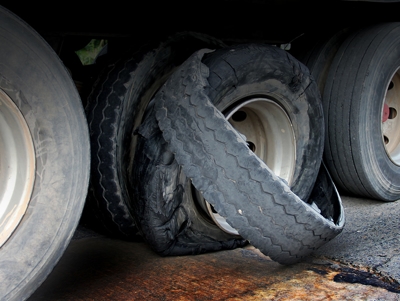
Follow the investigations. Serious bus accidents are always thoroughly investigated, usually by the NTSB, which does a good job of commandeering the scene and quarantining the evidence. You can piggyback your investigation on the federal one, and federal investigators often make preliminary determinations that can help your case. For example, in the 2008 Texas bus crash, the NTSB determined quickly that the bus had an illegal recapped tire on its front axle.12 It would probably take your investigators, working on their own, much longer to uncover that same information.
Drill deeper. The NTSB investigation is a great asset, but it will take you only so far. The agency paints with a broad brush, determining causation and the overall sequence of events, but it typically does not make significant findings related to individual passengers. It will not prove how your client was injured or whether seat belts and ejection-resistant glazing would have saved his or her life. Only you can do that.
Create the story
A bus accident is a story with a beginning, a middle, and an end, and your job is to put the jurors on the bus. They need to experience not only what happened, but also why and how it could have been prevented. Create a seating chart that shows where your client was and where he or she ended up. Use visuals or animation to convey the horror your client felt.
There are too many needless deaths and injuries on America’s buses, but it doesn’t have to be that way. After all, the major airlines have an enviable safety record: There has not been a single fatality on an American air carrier in the last two years. The difference is the airlines’ commitment to putting safety first. Airline regulators take steps to prevent accidents and ensure compliance with regulations.
A similar commitment to bus passenger safety could yield comparable gains in accident reduction and save lives. Until that happens, taking the bus will remain a risky proposition.
Rob Ammons is a lawyer in Houston. He can be reached via e-mail at info@ammonslaw.com.
Notes:
If you or a loved one has been injured due to the negligence of others, call or click here to contact the attorneys at The Ammons Law Firm today for a free consultation.
Cooper Tire & Rubber Co. And Wal-Mart Sued After Fatal Tread Separation Rollover
Release dateline: May 20, 2013
Attorney Rob Ammons Files Lawsuit Against Drunk Driver after Hit-and-Run Collision
Release dateline: May 20, 2013
Strake Jesuit - AMMONS PLACES 3RD IN 3200 AT STATE MEET
Release dateline: May 19, 2013
Ammons’ medals at State Track Meet
Release dateline: May 15, 2013
Attorney Rob Ammons Files Suit Against Sam’s Club and Grill Maker after Propane Explosion
Release dateline: May 8, 2013
Personal Watercraft Owner Pays after Fatal Lake Accident
Release dateline: May 8, 2013
Chemical Safety Board Deploying to West Fertilizer Plant Accident
Release dateline: April 17, 2013
Suit Filed Against Bell Helicopter Following Fatal Helicopter Crash
Release dateline: April 17, 2013
Product Defect Attorney Settles Suit Against Ford and Cooper Tire after Fatal Rollover
Release dateline: March 8, 2013
Commercial Trucking Company Compensates Crash Victims
Release dateline: March 8, 2013
Product Defect Attorney Settles Suit Against Ford in Deadly Rollover
Release dateline: March 6, 2013
Ford Compensates Woman Injured In Rollover of Defective Explorer
Release dateline: March 6, 2013
FedEx Pays in Fatal Pedestrian Accident
Release dateline: February 8, 2013
Nightclub Pays After Fatal Crash Caused by Drunk Teen Patron
Release dateline: February 8, 2013
Cooper Tire & Rubber Co. Sued Following Fatal Crash
Release dateline: January 17, 2013
General Motors Compensates Family of Rollover Victim
Release dateline: December 21, 2012
Wells Fargo Pays in ATM Assault
Release dateline: December 21, 2012
Ford Pays Family After Deadly Rollover
Release dateline: December 21, 2012
Trucking Company Compensates Heirs of Landscaper Killed by 18-Wheeler
Release dateline: December 19, 2012
General Motors and Continental Tire Pay in Fatal Rollover
Release dateline: December 5, 2012
Ford Pays Family After Deadly Rollover
Release dateline: December 5, 2012
Concrete Company Compensates Injured Motorists Struck by Cement Mixer
Release dateline: November 15, 2012
Local Trucking Company Pays in Tractor-Trailer Crash Fatality
Release dateline: November 15, 2012
Drilling Rig Accident Attorney Rob Ammons Files Lawsuit Against BP
Release dateline: November 6, 2012
Cooper Tire and Ford Compensate Couple Injured in Highway Crash
Release dateline: November 6, 2012
Attorney Rob Ammons Files Suit Against Toyota and Safelite After Double-Fatality Rollover
Release dateline: October 18, 2012
General Motors Compensates Family of Woman Killed in SUV Rollover
Release dateline: October 10, 2012
SUV Rollover Attorney Rob Ammons Settles Suit Against Ford After Fatal Rollover
Release dateline: October 3, 2012
Product Defect Attorney Settles Suit Against Toyota in Deadly Pickup Crash
Release dateline: October 3, 2012
Ford Motor Company Sued After Explorer Sport Trac Proves Uncrashworthy in Rollover
Release dateline: October 3, 2012
Workplace Negligence Attorney Rob Ammons Files Lawsuitfor Wife and Children of Worker Crushed by Crane
Release dateline: September 26, 2012
Tire Defect Attorney Rob Ammons Files Suit Against Michelin and Tire Shop After Old Tire Causes Wreck
Release dateline: September 26, 2012
Cooper Tire & Rubber Co. Sued Following Fatal Tread Separation Rollover
Release dateline: September 26, 2012
Employer Compensates Motorist Rear-Ended by its Driver
Release dateline: September 26, 2012
General Motors Pays in Case of Brain Injured Woman
Release dateline: September 26, 2012
Bridgestone, Tire Shop and Ford Sued After Fatal Rollover
Release dateline: September 26, 2012
Rob Ammons was selected by his peers to be included in the Best Lawyers in America, 19th Edition.
Release dateline: September 18, 2012
Ford and Cooper Pay Heirs of Man Killed In Rollover
Release dateline: September 18, 2012
Brain-Injured Wrecker Driver Compensated in Trucking Accident
Release dateline: August 13, 2012
The 2012 recipient of the Wade-Ammons “Stepping into My Destiny Scholarship” is Jalicia Hines.
Release dateline: August 10, 2012
Ford can't "Escape" SUV recall, investigation
Release dateline: July 27, 2012
Ford Recalls 421,000 Escapes
Release dateline: July 27, 2012
Michelin recalls 841,000 BFGoodrich and Uniroyal light commercial tires for tread separation
Release dateline: July 27, 2012
Suit Filed Against Tire Retailer After Tread Separation Kills Three
Release dateline: July 17, 2012
Rollover Caused by Failure of Recalled Tire Spurs Lawsuit against Bridgestone and Ford
Release dateline: July 17, 2012
Lawsuit Filed Against Trucking Company And Its Driver in Deadly Rural Crash
Release dateline: July 17, 2012
Feds fine Volvo $1.5 million for delayed recalls
Release dateline: July 7, 2012
Teen auto accident deaths highest on the 4th of July
Release dateline: July 7, 2012
GM recalls Chevy Cruze because of fire hazard, welding defect
Release dateline: July 3, 2012
Jeep Investigation is Growing
Release dateline: June 19, 2012
Rob Ammons Speaks With KHOU 11 About Aging Tires
Release dateline: June 19, 2012
Tire Defect Attorney Settles Suit Against Michelin in Double-Fatality Rollover
Release dateline: June 15, 2012
Chrysler recalling 2011 and 2012 Chrysler 300s and Dodge Chargers over ABS/ESC defect
Release dateline: June 7, 2012
Chrysler recalling 68,000 Jeep Wranglers due to fire hazard
Release dateline: June 7, 2012
GM threatens delay tactics, strong arms widow to drop punitive damages claim in lawsuit over tire tread separation-related crash
Release dateline: May 29, 2012
Utah Community helps local teen paralyzed by freak accident
Release dateline: May 29, 2012
Feds propose anti-rollover technology requirement for U.S. trucks and buses
Release dateline: May 22, 2012
Spinal cord injury research symposium details advances in treatment
Release dateline: May 22, 2012
Highway accident deaths reach historic low; safety improvements credited as one reason
Release dateline: May 22, 2012
Drug shows promise for spinal cord injury patients suffering pain, sleep disturbances
Release dateline: May 11, 2012
Tire manufacturer settles lawsuit after being sanctioned for discovery abuse
Release dateline: May 11, 2012
Chron.com: Strake Jesuit's Griffin, Ammons celebrate after making state
Release dateline: May 8, 2012
Cooper Tire & Rubber Co. And Pep Boys Sued After Tread Separation Rollover Injures Four
Release dateline: May 7, 2012
R. J. Ammons Earned A Berth In The State Track Meet
Release dateline: May 3, 2012
Experimental Neuroprosthesis Shows Promise For Spinal Cord Injury Patients
Release dateline: May 2, 2012
Montana jury finds tire tread separation caused accident, holds Ford responsible
Release dateline: May 2, 2012
Suit Filed Against Goodyear After Old Tire Causes Crash
Release dateline: April 25, 2012
Michelin recalls 77,000 tires for safety problem.
Release dateline: April 23, 2012
Nissan is also recalling certain model year 2003-2005 Infiniti Q45 vehicles because a wiring connector for the seat-mounted airbags may experience increased electrical resistance over time.
Release dateline: April 20, 2012
Rollover Attorney Rob Ammons Files Suit Against Ford After Ford Expedition’s Roof Paralyzes Driver
Release dateline: April 9, 2012
Children of Man Electrocuted by Whirlpool Washing Machine Compensated
Release dateline: April 9, 2012
Bridgestone Pays in Tread Separation Case
Release dateline: April 9, 2012
Suit Filed Against GM After Defective Trailblazer Causes Catastrophic Injuries
Release dateline: April 4, 2012
U.P.S. Pays for Fiery Fatality
Release dateline: April 4, 2012
Product Defect Attorney Settles Suit Against Continental and Ford in Double Fatality Rollover Crash
Release dateline: March 1, 2012
Product Defect Attorney Settles Suit Against Ford in Deadly Rollover Crash
Release dateline: February 28, 2012
Product Defect Attorney Rob Ammons Files Suit Against Ford Motor Company in Rollover of Uncrashworthy Explorer Sport Trac
Release dateline: February 28, 2012
"Be Smart, Be Safe": Goodyear Tire Recall
Release dateline: 2/27/12
Goodyear Recalls Wrangler Silent Armor Tires
Release dateline: February 27, 2012
US Probes Door Fires In 2006, 2007 TrailBlazers
Release dateline: February 13, 2012
Lawsuit Filed Against Trucking Company And Driver
Release dateline: January 5, 2012
Workplace Negligence Attorney Settles Fatal Scaffolding Collapse Lawsuit
Release dateline: January 5, 2012
Suit Filed Against Cooper After Tread Sepearation Causes Deadly Rollover
Release dateline: January 4, 2012
Article - Update On The Ammons Law Firm Scholarship Recepient Devon Wade.
Release dateline: December 21, 2011
Explosion Attorney Rob Ammons Talks to NBC News About Dangerous Pressure Vessels
Release dateline: May 20, 2011
While airline travel gets safer every year, travel on commercial bus lines gets more hazardous. Until the government steps in to oversee the industry, lax oversight and weak regulations will continue to make bus travel unacceptably risky.
Imagine that a commercial airliner crashed somewhere in the United States, and the subsequent investigation determined that the plane had numerous safety issues: There were no seat belts and no fire extinguishers on board, the fuselage was not structurally sound, and the windows were defective. Even worse, the airline had unlawfully delayed maintenance on critical aircraft components, such as brakes and landing gear.
No one knew this, though, because the plane had never been inspected. Moreover, the airline was not licensed to carry passengers, and the pilot was flying on a suspended license due to an expired medical certificate.
It couldn’t happen, you say. Not in this country.
But if you board a bus instead of a plane, the sad reality is it can and does. Every day, Americans ride buses that lack up-to-date safety equipment and are driven by improperly trained or unlicensed drivers.1
For a variety of reasons—poor oversight, poor bus design, maintenance problems, and lax operators—the level of safety on the average bus is far from what it should be. Until steps are taken to address these problems, Americans will continue to be needlessly injured and killed in tragic bus accidents.
Unlike plane crashes, bus accidents occur frequently in America, often with catastrophic results. In recent years, several highly publicized, tragic incidents have called attention to the problem:
Why do these tragedies keep recurring with depressing regularity? The problem is twofold. First, buses are not nearly as safe as they could be. Because of political pressure, inertia, or lack of will, safety features that can increase survivability in bus accidents are not required as standard equipment on buses.
Second, the regulatory structure that is supposed to protect the traveling public is abysmal. Not only have regulators failed to require safer buses, they also aren’t enforcing the regulations that do exist. The result is an environment where bus operators and drivers feel free to operate outside the rules without fear of consequences.
Without serious changes in the industry, the problem is likely to get worse. With fuel prices likely to go up and the economy trending down, people who used to fly or drive will take buses instead. And in emergency situations, evacuations of large cities could require people to ride on the nation’s buses.
Slow on safety
Compared with safety measures in airplanes or even automobiles, advances in passenger safety have been slow to find their way onto buses. And it’s not because the technology doesn’t exist. Experts around the world have conducted extensive research and collected significant data on how to improve bus safety. But that knowledge is not being used.
There are many ways to make buses safer, but we won’t see safety improvements until the federal government forces bus manufacturers to implement them. When that does happen, certain measures should be priorities.
Seat belts
Seat belts have been standard on both airplanes and automobiles for so long that most Americans can’t recall a time when they weren’t mandatory equipment. Incredibly, though, buses are rarely equipped with them. This omission is not an accident.
Safety advocates first proposed mandating seat belts on American buses more than 30 years ago, and other countries—including Australia and most European nations—long ago made seat belts in buses a requirement. Most studies show that placing belts in buses saves lives.6
Just as they do in cars and on airplanes, seat belts in buses keep passengers in their seats during an accident. A collision or rollover subjects passengers to tremendous forces that can propel them out of their seats and slam them into the bus’s interior surfaces. These forces are usually strong enough to eject people through windows and out of the bus—which is an alarmingly frequent cause of death in bus accidents.7
Critics of mandated seat belt use say seat belts would be expensive, would add too much weight to the bus, and would be difficult to install. But it is possible to use an existing seat design that would add no weight and cost the same as seats currently used in buses.8
Stronger roofs
Any time a bus crashes, passengers’ survivability depends on the bus maintaining a “survival space” free from any encroachment by the damaged structure of the bus itself. Passengers face significant risk if the side or roof of the bus collapses. When the survival space is compromised, passengers can be severely injured.
The strength of the roof depends on its support structure, the pillars between the windows of the bus. As bus manufacturers have enlarged their vehicles’ windows for the convenience of passengers, the support structure for roofs has gotten smaller. Weaker roofs are more likely to give way in rollover and other accidents, increasing the injury risk. Mandating stronger roofs on buses would save lives.
While bus safety experts have been aware of the problem for some time, buses continue to operate under regulations that permit a bus’s roof to be less rigid than is necessary. The NTSB has identified stronger bus roofs as a top priority.9
Window glazing
Because passengers can be thrown through bus windows during an accident, safety experts have developed technology, known as ejection-resistant window glazing, to strengthen the windows. Because studies indicate that ejection is a leading cause of death in bus accidents, ejection-resistant glazing in all buses would help reduce the risk of death and injury.10 But again, the failure of government authorities to require this critical technology means that it remains woefully underused.
Also troubling are bus manufacturers’ efforts to use inadequate regulations as a shield against liability. In one recent case, a bus manufacturer asserted that the plaintiffs’ defective design claims regarding seat belts and laminated windows were impliedly preempted because they conflicted with federal motor vehicle regulations.
In a well-reasoned decision, the Texas Court of Appeals disagreed with the bus manufacturer. In holding that there had been no clear federal expression of opposition to the installation of passenger seat belts in motor coaches, the court said, “[W]e cannot say that a state common law duty in tort to install passenger seat belts is impliedly preempted; such a duty does not frustrate or ‘stand as an obstacle to accomplishment and execution’ of federal purposes and objectives.”11
Lax oversight
In addition to the safety problems of the buses themselves, there are problems with the people who own and operate buses. Unlike pilots and airplanes, which are closely monitored, unfit drivers and uninspected buses are regularly on the road. There are several reasons for this.
Lax enforcement of existing regulations. While in theory buses are subject to strict rules, the grim reality is that bus safety regulations are enforced sporadically. And the procedures for keeping unlicensed drivers off the road are insufficient. Bus operators are not particularly concerned that they will be shut down for rules violations—and too often they aren’t stopped until it is too late, as the 2005 and 2008 Texas bus tragedies demonstrate.
Poor oversight of bus operators. Anyone can start a bus company: All you have to do is buy a used motor coach. While an airline cannot operate under the radar of federal regulators, bus operators can. Rogue operators can own several buses and operate for years without detection. In fact, government oversight is so poor that state and federal governments cannot even ensure that buses used for mandatory emergency evacuations are safe—a fact tragically underscored by the case where 23 evacuees died in a bus fire while fleeing Hurricane Rita in 2005.
Unqualified bus drivers. Several regulations pertain to bus drivers’ qualifications and licensing. As the industry has grown, more drivers have been needed, and some bus owners have met this demand by relaxing driver qualifications. Because of lax oversight, too many owners simply look the other way and hope that nothing happens.
Failure to update regulation and oversight. Simply enforcing the current regulations is not enough. Enforcement mechanisms need to improve to the point where regulators, charterers, and the traveling public can determine instantly whether a bus’s inspections are up-to-date and the driver is properly licensed. When owners and drivers know they can no longer get away with breaking the law, the problems of unlicensed drivers and unsafe buses will diminish considerably.
Comprehensive motor coach legislation is long overdue. Some lawmakers have taken note of the growing crisis in the bus industry. In the wake of the Atlanta bus crash that killed five students from Bluffton University in Ohio, Sens. Sherrod Brown (D-Ohio) and Kay Bailey Hutchison (R-Tex.) introduced the Motorcoach Enhanced Safety Act of 2007. It is a comprehensive bill designed to implement long-overdue reforms.
Specifically, it provides for
These measures are not controversial. They are commonsense safety improvements that would bring the United States up to a level of safety commensurate with other countries. But the act’s future prospects remain up in the air. The bill did not pass in the last Congress, but its proponents will certainly reintroduce it in the new session. Unfortunately, it may take yet another tragedy before buses get the attention of both Congress and the traveling public.
If you decide to represent bus crash victims, keep the following general guidelines in mind.
Investigate early
Things happen fast in the hours and days after a bus crash, so you need to begin your work the minute you are retained. Investment of resources early will pay off later in better evidence and a better understanding of the case.
Collect the evidence
Your case depends largely on what is photographed, observed, and collected right after the crash. Generally speaking, the more evidence you collect, the more likely you are to win your case. The reason is simple: Buses aren’t supposed to crash. When they do, something went wrong.
Inspect the scene
As soon as you can, get to the crash site and get a feel for the road, the traffic, the terrain, the obstacles, any unusual features, and other aspects of the site. Photographs and descriptions won’t give you the full context of what happened. You need to put the bus, the victims, the weather, and the road conditions in their proper place and sequence so that you can re-create the accident for the jury.
Follow the investigations. Serious bus accidents are always thoroughly investigated, usually by the NTSB, which does a good job of commandeering the scene and quarantining the evidence. You can piggyback your investigation on the federal one, and federal investigators often make preliminary determinations that can help your case. For example, in the 2008 Texas bus crash, the NTSB determined quickly that the bus had an illegal recapped tire on its front axle.12 It would probably take your investigators, working on their own, much longer to uncover that same information.
Drill deeper. The NTSB investigation is a great asset, but it will take you only so far. The agency paints with a broad brush, determining causation and the overall sequence of events, but it typically does not make significant findings related to individual passengers. It will not prove how your client was injured or whether seat belts and ejection-resistant glazing would have saved his or her life. Only you can do that.
Create the story
A bus accident is a story with a beginning, a middle, and an end, and your job is to put the jurors on the bus. They need to experience not only what happened, but also why and how it could have been prevented. Create a seating chart that shows where your client was and where he or she ended up. Use visuals or animation to convey the horror your client felt.
There are too many needless deaths and injuries on America’s buses, but it doesn’t have to be that way. After all, the major airlines have an enviable safety record: There has not been a single fatality on an American air carrier in the last two years. The difference is the airlines’ commitment to putting safety first. Airline regulators take steps to prevent accidents and ensure compliance with regulations.
A similar commitment to bus passenger safety could yield comparable gains in accident reduction and save lives. Until that happens, taking the bus will remain a risky proposition.
Rob Ammons is a lawyer in Houston. He can be reached via e-mail at info@ammonslaw.com.
Notes:
If you or a loved one has been injured due to the negligence of others, call or click here to contact the attorneys at The Ammons Law Firm today for a free consultation.