



"I would like to thank you all, for all your help in our case on behalf of my family and myself, ya'll did a great job and are great persons! Thank You"
"I just want to thank you for all the hard work on my case. The case moved efficiently and everyone involved made sure my every need was met. I do want to say that Anjali Nigam was one of the best advocates I had. She was perfect in every aspect. I have a new lease on life now because of what you and The Ammons Law Firm achieved for me. Thank you, that’s all I have to try and explain how grateful I am. Thank you for fighting as hard as I fought to stay alive. – God Bless!"
"Thank you very much for all the work that you did on our behalf. I really appreciate everything that you all did, as well as your professionalism and the timely manner in which you got things done.
Also, please give our thanks to your staff who were so helpful when we had questions! If we have need of your services or if we know anyone else who does anytime in the future, we will certainly give you a call! Thank you again for everything."
"A little over two years ago I received a telephone call that all parents dread to hear. The person on the other line simply said, “Your daughter has been in an accident”. Well here I was 1500 miles away from her , trying to absorb the rest of the conversation, trying to stay focused enough to get the details. Shortly after I arrived in Texas my lovely daughter of 38 years passed away from injuries sustained from a motorcycle accident.
I won’t continue this story, however what I will say is, when things calmed down a little, I knew I must become a voice for my daughter. Though a chain of events our family was introduced to the Ammons Law Firm of Houston, Texas.
From the first initial contact with Mr. Robert Ammons and his staff, I hung up the telephone feeling as if I and my family were in good hands. We had constant contact from Ohio to Texas via the telephone and the computer for two years. The staff made all the arrangements anytime I had to fly to Texas and made sure I had comfortable accommodations while I was there.
My family and I were kept abreast of the progress for our case on a regular basis. Anytime I had any questions, the staff was polite, informative, and punctual with the answers.
I am very satisfied with the level of concern and commitment Mr. Ammons and his staff displayed from the beginning to the conclusion of our association.
I would highly recommend this law firm to anyone who might be seeking one.
Thank You Mr. Ammons and your staff."
-Candee P., Former client
Mineral Wells, Tx
"I was totally happy with Rob Ammons and the lawyers at the Ammons Law Firm. Rob Ammons went the extra mile. I am beside myself. I feel so good with the settlement they obtained."
-Christopher R., Former Client
Mt. Belvieu, Tx
-Monica S., Former Client
Miami Gardens, Fl
November 2002
Children who are too big for safety seats and too small for adult-size seat belts face a high risk of injury in crashes. Youngsters who fall into this safety gap need artful advocacy.
Robert E. Ammons
Safety experts and auto manufacturers have long known that a lack of crash protection exists for children between the ages of four and eight. Most children in this age group have outgrown their child safety seats. Yet they are too small to be adequately protected by seat belt restraints that have been designed for adults and fit poorly on a child’s small frame.1
Automakers say that children who are 12 and under should ride in a vehicle’s rear seats.2 The outside rear seats of domestic vehicles made in the last decade are equipped with combination lap/shoulder belts. Passengers seated in the middle of a rear bench seat are usually secured by a two-point lap belt. Unfortunately, few of these restraints are designed to accommodate an occupant shorter than 57 inches and weighing less than 80 pounds.3 The average six-year-old child—who is right in the middle of the “forgotten child” age range—stands only 47 inches high and weighs merely 52 pounds.
Manufacturers concede that injuries and deaths attributable to the safety gap have reached unacceptable proportions. According to industry estimates, 500 children are killed every year, and thousands more are seriously injured, due to a lack of proper belt usage.4 Many of these children were killed while wearing safety belts.5 At a recent trade show, a former chief executive officer of Ford Motor Co. told colleagues that “these are preventable tragedies and urgent action is needed” to close the safety gap.6
Studies demonstrate that every 90 seconds a child is killed or injured in a motor vehicle crash.7 During the 1990s, children between the ages of four and eight were dying in crashes at a rate of about 16 per week.8
Between 1982 and 1998, there was a 23 percent increase in automotive fatalities among children aged five to nine.9 In 2000, 2,343 children under 15 were killed, and more than 291,000 were injured in motor vehicle crashes.10
Manufacturers would have the public believe that the best way to prevent these tragedies is through the use of aftermarket child safety seats. According to the National Highway Traffic Safety Administration (NHTSA), placing a child in an age-appropriate safety seat will reduce a child’s risk of dying in a crash by as much as two-thirds.11
Parents are restraining children four and under in child safety seats. The usage rate of safety seats for children under one year old is 95 percent; the rate for children between ages one and four is 91 percent.12 But according to recent studies, the usage rate for children in the safety gap is substantially lower—10 percent.13
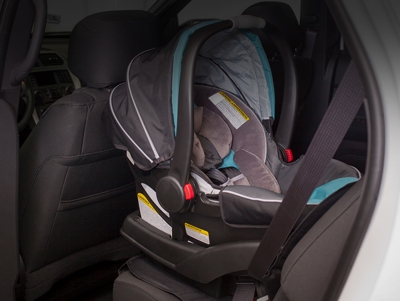
The National Transportation Safety Board and NHTSA recommend that children who outgrow child safety seats be placed in “booster seats” until they are large enough for adult-size lap and shoulder belts.14 A well-designed booster seat positions a child so that the three-point shoulder and lap belts fit better.
However, less than 10 percent of children between the ages of four and eight use booster seats.15 This is probably due, in part, to the lack of consensus among experts concerning which types of seats are appropriate for children of different ages and sizes.
For example, NHTSA recommends that children who have outgrown child safety seats be restrained in booster seats until they are at least eight years old, unless they are 49 inches tall.16 On the other hand, a study conducted by the Children’s Hospital of Philadelphia, State Farm Insurance Co., and the University of Pennsylvania suggests that parents should keep children in booster seats until they are at least eight years old, weigh 80 pounds, and are 58 inches tall.17 In light of this conflicting information, how are parents supposed to determine whether their child should be using a booster seat?
This confusion is exacerbated by manufacturers’ failure to develop their own booster seats. Not every seat works well in every vehicle. Obviously, auto manufacturers are in the best position to determine which types of booster seats are best suited for the wide range of vehicles they build. But they neither build booster seats nor adequately test aftermarket seats to determine which ones can be used safely with their vehicles’ rear seat-belt restraint systems. As a result, parents are denied important information regarding the proper fit of booster seat, child, and vehicle.
Understanding the injuries
In a collision, the seat belt is supposed to slow down the occupant with the vehicle and spread the forces of the collision to the strong bones of the body.18 Proper belt fit and good belt geometry are important in maximizing protection.19
The auto industry has long been aware of the dangers associated with placing children in restraints designed for adults. These dangers result in three types of injuries: submarining injuries to the spine and abdomen; fulcrum injuries to the cervical spine; and injuries associated with partial or full ejection.
Submarining injuries
The lap portion of a properly fitting seat belt should fit snugly below the hips.20 In a crash, the lap belt should couple the occupant to the vehicle and provide restraint by transferring force to the pelvic bones.21 Submarining occurs when a passenger’s pelvis and buttocks slide down and forward during a collision, allowing the lap belt to slip up to the abdomen.22 Submarining can cause severe intra-abdominal injuries and spinal cord trauma.23
Children between four and eight are particularly vulnerable to this type of injury. The lap and shoulder belt geometry is not well suited to their stature. They tend to slouch down in their seats because their legs do not hang comfortably over the edge of the seat cushion.24 Consequently, the lap belt lies above the child’s pelvis and can easily slide up to the abdomen during a crash.25
Fulcrum injuries
The shoulder harness of a rear seat lap/shoulder belt typically passes diagonally across an adult’s outside shoulder, over the sternum, and down to the inside hip where it connects with the lap belt and fastens into the seat belt buckle.26 In the case of a child, the typical shoulder harness crosses in front of the child’s face or throat.27
A belt in this position creates an artificial fulcrum that, during an accident, can stretch the upper spine past the breaking point, resulting in paralysis or death.28 If the torso belt is not used (either because the vehicle is not equipped with it or because it is placed behind the child’s back for a more comfortable fit), the fulcrum point is at the waist. This can cause severe head injuries when the force of an impact throws the child’s head forward onto his or her knees or the back of the front seat.29
Full or partial ejection injuries
Some seat belts are so poorly designed that even belted children can be thrown completely out of a vehicle. Such was the case in Johnston v. Ford Motor Co.30 In that case, five-year-old Cody Johnston was riding as a front-seat passenger while his mother was driving the family’s Ford Ranger on an interstate. Both Cody and his mother were wearing three-point lap/shoulder belts.31
Another vehicle collided with the Ranger, causing it to roll over. Cody was thrown from the car and killed. The investigating officer noted in the police report that Cody was not big enough for the seat belt and that the belt was still buckled after the car came to rest.
Poor seat-belt design can also cause partial ejection.32 Torso rollout—when the torso of a child completely escapes or rolls out of the shoulder harness—is a type of partial ejection that can occur in oblique crashes and rollovers.33 Children who roll out of a shoulder belt often sustain severe intra-abdominal injuries and lumbar or cervical spinal cord injuries, often resulting in paralysis.34
Establishing liability
As with any crashworthiness case, one brought on behalf of a child injured by improperly fitting, or absent, safety belts is based on the claim that the vehicle was defectively designed because it failed to provide adequate occupant protection during a crash.
In addition to proving that a product is unreasonably dangerous as designed, plaintiffs in many jurisdictions are required to assert a design defect claim to prove the existence of a safer alternative design. A safer alternative design in safety gap cases is the integrated child seat. These are seats with harnesses built into the cushion of a vehicle’s rear seats. They have been available in some European vehicles since the late1980s. Child safety advocates, manufacturers, and safety experts agree that an integrated child seat with a five-point harness is the safest form of child restraint available.35
Most jurisdictions also require plaintiffs to prove that a proposed safer alternative design is economically and technologically feasible. In the United States, Chrysler first introduced five-point integrated child seats in the U.S. market by placing them in its minivans in the 1992 model year. Other manufacturers have also offered the seats, as optional equipment on select model vehicles.
Accordingly, the auto manufacturers’ own conduct proves the technological and economic feasibility of this safer alternative design. Moreover, there is no real functional or cosmetic problem associated with integrated child seats; the seat is virtually indistinguishable from a normal bench seat when the safety seat is not in use.
Plaintiff attorneys also should consider advancing a marketing-defect claim . This concerns the seller’s failure to adequately warn or instruct consumers on the safe use of the product. Manufacturers recognize that nearly 80 percent of parents do not use the proper safety device for their four- to eight-year-old children; automakers clearly have knowledge of the danger. Yet manuals and notices that accompany many vehicles do not warn parents of the danger associated with having children wear seat belts designed for adults.
Many owner’s manuals may suggest that booster seats be used for children who weigh 40 to 80 pounds, but they are unlikely to contain any meaningful instruction on which ones work best with the vehicle’s seat belts. These vehicles therefore lack adequate instructions for safe use by children in the safety gap.
Making the case
As soon as a potential client contacts you, take immediate steps to preserve the evidence. The vehicle should be secured in its postcrash condition. Nothing should be disassembled or removed from it without notice to the defendants.
You should inspect the seat belt, review the child’s medical records, and interview witnesses to determine if and how the child was wearing the belt. A qualified accident-reconstruction expert should inspect, measure, and photograph the crash scene and any other vehicles involved.
Retain a biomechanical engineer or qualified medical expert to review the medical records, X-rays, and other imaging studies to determine whether the child’s injuries were caused by a belt’s poor fit and geometry. After an initial review, consult an expert with knowledge of automobile design to analyze the design defect claims.
Obtain documentation from the manufacturer relating to the design and marketing issues raised in the case. Many of these materials have been disseminated publicly or uncovered in earlier litigation, so you may already have many of the relevant documents even before filing the case.
Anticipate certain defenses. First, the automaker may deny that a safety gap exists. This defense is easily refuted by statistical information compiled by independent third parties like the consumer advocacy group Public Citizen and by the auto industry’s own statements acknowledging the safety gap.
Second, the manufacturer may blame the child’s parents for not using a booster seat. To counter this, produce evidence showing there is no consensus on the appropriate use of booster seats. Properly qualified design and biomechanical experts can explain why the use of a booster seat may not have prevented the injuries sustained in a particular crash.
Finally, the manufacturer almost certainly will argue that because its rear-seat restraint system meets Federal Motor Vehicle Safety Standards, it is not defective. However, compliance with government standards does not establish as a matter of law that the design is not defective. Explain to the jury that these are minimum standards and that nothing prevents manufacturers from exceeding these minimum standards in the interests of children.
Auto manufacturers have a duty to design and market cars that provide consumers of all ages with a reasonable level of protection in the event of a crash. While seat belts may provide protection for many adults, a gap in crash protection exists for children between four and eight years old. Successfully pursuing cases for the forgotten children in this age group should allow the injured to obtain justice and cause auto manufacturers to improve the safety of their cars.
Notes
1. Martha W. Bidez & Stephen R. Syson, Kinematics, Injury Mechanisms, and Design Considerations for Older Children in Adult Torso Belts, SAE 2001-01-0173, in BIOMECHANICS RESEARCH & DEVELOPMENT (Soc’y Auto. Eng’rs 2001); Richard Stalnaker, Inconsistencies in State Laws and Federal Regulations Regarding Child Restraint Use in Automobiles, SAE 933087, in CHILD OCCUPANT PROTECTION 51 (Soc’y Auto. Eng’rs 1993).
2. Jacques Nasser, Former Chief Executive Officer, Ford Motor Co., Address at the New York International Auto Show (Apr. 2000).
3. Id.
4. See FORD MOTOR CO., BOOST AMERICA! RAISING KIDS WITH SAFETY IN MIND, available at www.actsinc.org/childpassengersafety.html (last visited Sept. 27, 2002).
5. See generally AUTO. COALITION FOR TRAFFIC SAFETY, INC., CHILD PASSENGER SAFETY, at www.actsinc.org/childpassengersafety.html (last visited Sept. 27, 2002).
6. See Nasser, supra note 2.
7. See S. REP. NO. 107-137 (2002).
8. Id.
9. Id.
10. Id.
11. NAT’L HIGHWAY TRAFFIC SAFETY ADMIN., BUYING A SAFER CAR FOR CHILD PASSENGERS (2001), available at www.nhtsa.dot.gov/People/ Injury/ChildPS/SaferCar2001/contents.html (last visited Sept. 27, 2002).
12. NAT’L HIGHWAY TRAFFIC SAFETY ADMIN., TRAFFIC SAFETY FACTS 2000—CHILDREN 5 (2000), available at www-nrd.nhtsa.dot.gov/pdf/nrd-30/ NCSA/TSF2000/2000chdfacts.pdf (last visited Sept. 27, 2002).
13. Press Release, Automotive Coalition for Traffic Safety, Blue Ribbon Panel II Announces Recommendations to Improve Child Passenger Safety (Mar. 15, 1999), available at www.actsinc.org/ whatsnew_5.html (last visited Sept. 27, 2002).
14. See S. REP. NO. 107-137, supra note 7.
15. Id.
16. See S. REP. NO. 107-137, supra note 7.
17. PARTNERS FOR CHILD PASSENGER SAFETY PROJECT, PARTNERS INTERIM REPORT (1997), available at www.chop.edu/download/ Interim_report.pdf.
18. Bidez & Syson, supra note 1.
19. Id.
20. Bidez & Syson, supra note 1.
21. David L. Perry, A Primer on Crashworthiness for the Non-Crashworthiness Lawyer ( Nov. 3, 2001), available at www.crashworthinesscases.com/ crashworthinessIntro.html.
22. See S. REP. NO. 107-137, supra note 7.
23. Id.
24. Id.
25. Id.
26. Bidez & Syson, supra note 1.
27. Id.
28. Id.
29. Id.
30. No. 010902023 PI ( Utah, Salt Lake County Dist. Ct. June 26, 2002).
31. See Utah Highway Patrol Accident Report (Nov. 8, 1999).
32. Bidez & Syson, supra note 1.
33. Id.
34. Id.
35. FORD MOTOR CO., INTEGRATED CHILD RESTRAINT STRATEGY STATUS REPORT (1995).
Robert E. Ammonsis a partner with Stevenson & Ammons in Houston.
Reprinted with permission of TRIAL (November, 2002), Copyright the Association of Trial Lawyers of America.
If you or a loved one has been injured due to the negligence of others, call or click here to contact the attorneys at The Ammons Law Firm today for a free consultation.
Cooper Tire & Rubber Co. And Wal-Mart Sued After Fatal Tread Separation Rollover
Release dateline: May 20, 2013
Attorney Rob Ammons Files Lawsuit Against Drunk Driver after Hit-and-Run Collision
Release dateline: May 20, 2013
Strake Jesuit - AMMONS PLACES 3RD IN 3200 AT STATE MEET
Release dateline: May 19, 2013
Ammons’ medals at State Track Meet
Release dateline: May 15, 2013
Attorney Rob Ammons Files Suit Against Sam’s Club and Grill Maker after Propane Explosion
Release dateline: May 8, 2013
Personal Watercraft Owner Pays after Fatal Lake Accident
Release dateline: May 8, 2013
Chemical Safety Board Deploying to West Fertilizer Plant Accident
Release dateline: April 17, 2013
Suit Filed Against Bell Helicopter Following Fatal Helicopter Crash
Release dateline: April 17, 2013
Product Defect Attorney Settles Suit Against Ford and Cooper Tire after Fatal Rollover
Release dateline: March 8, 2013
Commercial Trucking Company Compensates Crash Victims
Release dateline: March 8, 2013
Product Defect Attorney Settles Suit Against Ford in Deadly Rollover
Release dateline: March 6, 2013
Ford Compensates Woman Injured In Rollover of Defective Explorer
Release dateline: March 6, 2013
FedEx Pays in Fatal Pedestrian Accident
Release dateline: February 8, 2013
Nightclub Pays After Fatal Crash Caused by Drunk Teen Patron
Release dateline: February 8, 2013
Cooper Tire & Rubber Co. Sued Following Fatal Crash
Release dateline: January 17, 2013
General Motors Compensates Family of Rollover Victim
Release dateline: December 21, 2012
Wells Fargo Pays in ATM Assault
Release dateline: December 21, 2012
Ford Pays Family After Deadly Rollover
Release dateline: December 21, 2012
Trucking Company Compensates Heirs of Landscaper Killed by 18-Wheeler
Release dateline: December 19, 2012
General Motors and Continental Tire Pay in Fatal Rollover
Release dateline: December 5, 2012
Ford Pays Family After Deadly Rollover
Release dateline: December 5, 2012
Concrete Company Compensates Injured Motorists Struck by Cement Mixer
Release dateline: November 15, 2012
Local Trucking Company Pays in Tractor-Trailer Crash Fatality
Release dateline: November 15, 2012
Drilling Rig Accident Attorney Rob Ammons Files Lawsuit Against BP
Release dateline: November 6, 2012
Cooper Tire and Ford Compensate Couple Injured in Highway Crash
Release dateline: November 6, 2012
Attorney Rob Ammons Files Suit Against Toyota and Safelite After Double-Fatality Rollover
Release dateline: October 18, 2012
General Motors Compensates Family of Woman Killed in SUV Rollover
Release dateline: October 10, 2012
SUV Rollover Attorney Rob Ammons Settles Suit Against Ford After Fatal Rollover
Release dateline: October 3, 2012
Product Defect Attorney Settles Suit Against Toyota in Deadly Pickup Crash
Release dateline: October 3, 2012
Ford Motor Company Sued After Explorer Sport Trac Proves Uncrashworthy in Rollover
Release dateline: October 3, 2012
Workplace Negligence Attorney Rob Ammons Files Lawsuitfor Wife and Children of Worker Crushed by Crane
Release dateline: September 26, 2012
Tire Defect Attorney Rob Ammons Files Suit Against Michelin and Tire Shop After Old Tire Causes Wreck
Release dateline: September 26, 2012
Cooper Tire & Rubber Co. Sued Following Fatal Tread Separation Rollover
Release dateline: September 26, 2012
Employer Compensates Motorist Rear-Ended by its Driver
Release dateline: September 26, 2012
General Motors Pays in Case of Brain Injured Woman
Release dateline: September 26, 2012
Bridgestone, Tire Shop and Ford Sued After Fatal Rollover
Release dateline: September 26, 2012
Rob Ammons was selected by his peers to be included in the Best Lawyers in America, 19th Edition.
Release dateline: September 18, 2012
Ford and Cooper Pay Heirs of Man Killed In Rollover
Release dateline: September 18, 2012
Brain-Injured Wrecker Driver Compensated in Trucking Accident
Release dateline: August 13, 2012
The 2012 recipient of the Wade-Ammons “Stepping into My Destiny Scholarship” is Jalicia Hines.
Release dateline: August 10, 2012
Ford can't "Escape" SUV recall, investigation
Release dateline: July 27, 2012
Ford Recalls 421,000 Escapes
Release dateline: July 27, 2012
Michelin recalls 841,000 BFGoodrich and Uniroyal light commercial tires for tread separation
Release dateline: July 27, 2012
Suit Filed Against Tire Retailer After Tread Separation Kills Three
Release dateline: July 17, 2012
Rollover Caused by Failure of Recalled Tire Spurs Lawsuit against Bridgestone and Ford
Release dateline: July 17, 2012
Lawsuit Filed Against Trucking Company And Its Driver in Deadly Rural Crash
Release dateline: July 17, 2012
Feds fine Volvo $1.5 million for delayed recalls
Release dateline: July 7, 2012
Teen auto accident deaths highest on the 4th of July
Release dateline: July 7, 2012
GM recalls Chevy Cruze because of fire hazard, welding defect
Release dateline: July 3, 2012
Jeep Investigation is Growing
Release dateline: June 19, 2012
Rob Ammons Speaks With KHOU 11 About Aging Tires
Release dateline: June 19, 2012
Tire Defect Attorney Settles Suit Against Michelin in Double-Fatality Rollover
Release dateline: June 15, 2012
Chrysler recalling 2011 and 2012 Chrysler 300s and Dodge Chargers over ABS/ESC defect
Release dateline: June 7, 2012
Chrysler recalling 68,000 Jeep Wranglers due to fire hazard
Release dateline: June 7, 2012
GM threatens delay tactics, strong arms widow to drop punitive damages claim in lawsuit over tire tread separation-related crash
Release dateline: May 29, 2012
Utah Community helps local teen paralyzed by freak accident
Release dateline: May 29, 2012
Feds propose anti-rollover technology requirement for U.S. trucks and buses
Release dateline: May 22, 2012
Spinal cord injury research symposium details advances in treatment
Release dateline: May 22, 2012
Highway accident deaths reach historic low; safety improvements credited as one reason
Release dateline: May 22, 2012
Drug shows promise for spinal cord injury patients suffering pain, sleep disturbances
Release dateline: May 11, 2012
Tire manufacturer settles lawsuit after being sanctioned for discovery abuse
Release dateline: May 11, 2012
Chron.com: Strake Jesuit's Griffin, Ammons celebrate after making state
Release dateline: May 8, 2012
Cooper Tire & Rubber Co. And Pep Boys Sued After Tread Separation Rollover Injures Four
Release dateline: May 7, 2012
R. J. Ammons Earned A Berth In The State Track Meet
Release dateline: May 3, 2012
Experimental Neuroprosthesis Shows Promise For Spinal Cord Injury Patients
Release dateline: May 2, 2012
Montana jury finds tire tread separation caused accident, holds Ford responsible
Release dateline: May 2, 2012
Suit Filed Against Goodyear After Old Tire Causes Crash
Release dateline: April 25, 2012
Michelin recalls 77,000 tires for safety problem.
Release dateline: April 23, 2012
Nissan is also recalling certain model year 2003-2005 Infiniti Q45 vehicles because a wiring connector for the seat-mounted airbags may experience increased electrical resistance over time.
Release dateline: April 20, 2012
Rollover Attorney Rob Ammons Files Suit Against Ford After Ford Expedition’s Roof Paralyzes Driver
Release dateline: April 9, 2012
Children of Man Electrocuted by Whirlpool Washing Machine Compensated
Release dateline: April 9, 2012
Bridgestone Pays in Tread Separation Case
Release dateline: April 9, 2012
Suit Filed Against GM After Defective Trailblazer Causes Catastrophic Injuries
Release dateline: April 4, 2012
U.P.S. Pays for Fiery Fatality
Release dateline: April 4, 2012
Product Defect Attorney Settles Suit Against Continental and Ford in Double Fatality Rollover Crash
Release dateline: March 1, 2012
Product Defect Attorney Settles Suit Against Ford in Deadly Rollover Crash
Release dateline: February 28, 2012
Product Defect Attorney Rob Ammons Files Suit Against Ford Motor Company in Rollover of Uncrashworthy Explorer Sport Trac
Release dateline: February 28, 2012
"Be Smart, Be Safe": Goodyear Tire Recall
Release dateline: 2/27/12
Goodyear Recalls Wrangler Silent Armor Tires
Release dateline: February 27, 2012
US Probes Door Fires In 2006, 2007 TrailBlazers
Release dateline: February 13, 2012
Lawsuit Filed Against Trucking Company And Driver
Release dateline: January 5, 2012
Workplace Negligence Attorney Settles Fatal Scaffolding Collapse Lawsuit
Release dateline: January 5, 2012
Suit Filed Against Cooper After Tread Sepearation Causes Deadly Rollover
Release dateline: January 4, 2012
Article - Update On The Ammons Law Firm Scholarship Recepient Devon Wade.
Release dateline: December 21, 2011
Explosion Attorney Rob Ammons Talks to NBC News About Dangerous Pressure Vessels
Release dateline: May 20, 2011
November 2002
Children who are too big for safety seats and too small for adult-size seat belts face a high risk of injury in crashes. Youngsters who fall into this safety gap need artful advocacy.
Robert E. Ammons
Safety experts and auto manufacturers have long known that a lack of crash protection exists for children between the ages of four and eight. Most children in this age group have outgrown their child safety seats. Yet they are too small to be adequately protected by seat belt restraints that have been designed for adults and fit poorly on a child’s small frame.1
Automakers say that children who are 12 and under should ride in a vehicle’s rear seats.2 The outside rear seats of domestic vehicles made in the last decade are equipped with combination lap/shoulder belts. Passengers seated in the middle of a rear bench seat are usually secured by a two-point lap belt. Unfortunately, few of these restraints are designed to accommodate an occupant shorter than 57 inches and weighing less than 80 pounds.3 The average six-year-old child—who is right in the middle of the “forgotten child” age range—stands only 47 inches high and weighs merely 52 pounds.
Manufacturers concede that injuries and deaths attributable to the safety gap have reached unacceptable proportions. According to industry estimates, 500 children are killed every year, and thousands more are seriously injured, due to a lack of proper belt usage.4 Many of these children were killed while wearing safety belts.5 At a recent trade show, a former chief executive officer of Ford Motor Co. told colleagues that “these are preventable tragedies and urgent action is needed” to close the safety gap.6
Studies demonstrate that every 90 seconds a child is killed or injured in a motor vehicle crash.7 During the 1990s, children between the ages of four and eight were dying in crashes at a rate of about 16 per week.8
Between 1982 and 1998, there was a 23 percent increase in automotive fatalities among children aged five to nine.9 In 2000, 2,343 children under 15 were killed, and more than 291,000 were injured in motor vehicle crashes.10
Manufacturers would have the public believe that the best way to prevent these tragedies is through the use of aftermarket child safety seats. According to the National Highway Traffic Safety Administration (NHTSA), placing a child in an age-appropriate safety seat will reduce a child’s risk of dying in a crash by as much as two-thirds.11
Parents are restraining children four and under in child safety seats. The usage rate of safety seats for children under one year old is 95 percent; the rate for children between ages one and four is 91 percent.12 But according to recent studies, the usage rate for children in the safety gap is substantially lower—10 percent.13
The National Transportation Safety Board and NHTSA recommend that children who outgrow child safety seats be placed in “booster seats” until they are large enough for adult-size lap and shoulder belts.14 A well-designed booster seat positions a child so that the three-point shoulder and lap belts fit better.
However, less than 10 percent of children between the ages of four and eight use booster seats.15 This is probably due, in part, to the lack of consensus among experts concerning which types of seats are appropriate for children of different ages and sizes.
For example, NHTSA recommends that children who have outgrown child safety seats be restrained in booster seats until they are at least eight years old, unless they are 49 inches tall.16 On the other hand, a study conducted by the Children’s Hospital of Philadelphia, State Farm Insurance Co., and the University of Pennsylvania suggests that parents should keep children in booster seats until they are at least eight years old, weigh 80 pounds, and are 58 inches tall.17 In light of this conflicting information, how are parents supposed to determine whether their child should be using a booster seat?
This confusion is exacerbated by manufacturers’ failure to develop their own booster seats. Not every seat works well in every vehicle. Obviously, auto manufacturers are in the best position to determine which types of booster seats are best suited for the wide range of vehicles they build. But they neither build booster seats nor adequately test aftermarket seats to determine which ones can be used safely with their vehicles’ rear seat-belt restraint systems. As a result, parents are denied important information regarding the proper fit of booster seat, child, and vehicle.
Understanding the injuries
In a collision, the seat belt is supposed to slow down the occupant with the vehicle and spread the forces of the collision to the strong bones of the body.18 Proper belt fit and good belt geometry are important in maximizing protection.19
The auto industry has long been aware of the dangers associated with placing children in restraints designed for adults. These dangers result in three types of injuries: submarining injuries to the spine and abdomen; fulcrum injuries to the cervical spine; and injuries associated with partial or full ejection.
Submarining injuries
The lap portion of a properly fitting seat belt should fit snugly below the hips.20 In a crash, the lap belt should couple the occupant to the vehicle and provide restraint by transferring force to the pelvic bones.21 Submarining occurs when a passenger’s pelvis and buttocks slide down and forward during a collision, allowing the lap belt to slip up to the abdomen.22 Submarining can cause severe intra-abdominal injuries and spinal cord trauma.23
Children between four and eight are particularly vulnerable to this type of injury. The lap and shoulder belt geometry is not well suited to their stature. They tend to slouch down in their seats because their legs do not hang comfortably over the edge of the seat cushion.24 Consequently, the lap belt lies above the child’s pelvis and can easily slide up to the abdomen during a crash.25
Fulcrum injuries
The shoulder harness of a rear seat lap/shoulder belt typically passes diagonally across an adult’s outside shoulder, over the sternum, and down to the inside hip where it connects with the lap belt and fastens into the seat belt buckle.26 In the case of a child, the typical shoulder harness crosses in front of the child’s face or throat.27
A belt in this position creates an artificial fulcrum that, during an accident, can stretch the upper spine past the breaking point, resulting in paralysis or death.28 If the torso belt is not used (either because the vehicle is not equipped with it or because it is placed behind the child’s back for a more comfortable fit), the fulcrum point is at the waist. This can cause severe head injuries when the force of an impact throws the child’s head forward onto his or her knees or the back of the front seat.29
Full or partial ejection injuries
Some seat belts are so poorly designed that even belted children can be thrown completely out of a vehicle. Such was the case in Johnston v. Ford Motor Co.30 In that case, five-year-old Cody Johnston was riding as a front-seat passenger while his mother was driving the family’s Ford Ranger on an interstate. Both Cody and his mother were wearing three-point lap/shoulder belts.31
Another vehicle collided with the Ranger, causing it to roll over. Cody was thrown from the car and killed. The investigating officer noted in the police report that Cody was not big enough for the seat belt and that the belt was still buckled after the car came to rest.
Poor seat-belt design can also cause partial ejection.32 Torso rollout—when the torso of a child completely escapes or rolls out of the shoulder harness—is a type of partial ejection that can occur in oblique crashes and rollovers.33 Children who roll out of a shoulder belt often sustain severe intra-abdominal injuries and lumbar or cervical spinal cord injuries, often resulting in paralysis.34
Establishing liability
As with any crashworthiness case, one brought on behalf of a child injured by improperly fitting, or absent, safety belts is based on the claim that the vehicle was defectively designed because it failed to provide adequate occupant protection during a crash.
In addition to proving that a product is unreasonably dangerous as designed, plaintiffs in many jurisdictions are required to assert a design defect claim to prove the existence of a safer alternative design. A safer alternative design in safety gap cases is the integrated child seat. These are seats with harnesses built into the cushion of a vehicle’s rear seats. They have been available in some European vehicles since the late1980s. Child safety advocates, manufacturers, and safety experts agree that an integrated child seat with a five-point harness is the safest form of child restraint available.35
Most jurisdictions also require plaintiffs to prove that a proposed safer alternative design is economically and technologically feasible. In the United States, Chrysler first introduced five-point integrated child seats in the U.S. market by placing them in its minivans in the 1992 model year. Other manufacturers have also offered the seats, as optional equipment on select model vehicles.
Accordingly, the auto manufacturers’ own conduct proves the technological and economic feasibility of this safer alternative design. Moreover, there is no real functional or cosmetic problem associated with integrated child seats; the seat is virtually indistinguishable from a normal bench seat when the safety seat is not in use.
Plaintiff attorneys also should consider advancing a marketing-defect claim . This concerns the seller’s failure to adequately warn or instruct consumers on the safe use of the product. Manufacturers recognize that nearly 80 percent of parents do not use the proper safety device for their four- to eight-year-old children; automakers clearly have knowledge of the danger. Yet manuals and notices that accompany many vehicles do not warn parents of the danger associated with having children wear seat belts designed for adults.
Many owner’s manuals may suggest that booster seats be used for children who weigh 40 to 80 pounds, but they are unlikely to contain any meaningful instruction on which ones work best with the vehicle’s seat belts. These vehicles therefore lack adequate instructions for safe use by children in the safety gap.
Making the case
As soon as a potential client contacts you, take immediate steps to preserve the evidence. The vehicle should be secured in its postcrash condition. Nothing should be disassembled or removed from it without notice to the defendants.
You should inspect the seat belt, review the child’s medical records, and interview witnesses to determine if and how the child was wearing the belt. A qualified accident-reconstruction expert should inspect, measure, and photograph the crash scene and any other vehicles involved.
Retain a biomechanical engineer or qualified medical expert to review the medical records, X-rays, and other imaging studies to determine whether the child’s injuries were caused by a belt’s poor fit and geometry. After an initial review, consult an expert with knowledge of automobile design to analyze the design defect claims.
Obtain documentation from the manufacturer relating to the design and marketing issues raised in the case. Many of these materials have been disseminated publicly or uncovered in earlier litigation, so you may already have many of the relevant documents even before filing the case.
Anticipate certain defenses. First, the automaker may deny that a safety gap exists. This defense is easily refuted by statistical information compiled by independent third parties like the consumer advocacy group Public Citizen and by the auto industry’s own statements acknowledging the safety gap.
Second, the manufacturer may blame the child’s parents for not using a booster seat. To counter this, produce evidence showing there is no consensus on the appropriate use of booster seats. Properly qualified design and biomechanical experts can explain why the use of a booster seat may not have prevented the injuries sustained in a particular crash.
Finally, the manufacturer almost certainly will argue that because its rear-seat restraint system meets Federal Motor Vehicle Safety Standards, it is not defective. However, compliance with government standards does not establish as a matter of law that the design is not defective. Explain to the jury that these are minimum standards and that nothing prevents manufacturers from exceeding these minimum standards in the interests of children.
Auto manufacturers have a duty to design and market cars that provide consumers of all ages with a reasonable level of protection in the event of a crash. While seat belts may provide protection for many adults, a gap in crash protection exists for children between four and eight years old. Successfully pursuing cases for the forgotten children in this age group should allow the injured to obtain justice and cause auto manufacturers to improve the safety of their cars.
Notes
1. Martha W. Bidez & Stephen R. Syson, Kinematics, Injury Mechanisms, and Design Considerations for Older Children in Adult Torso Belts, SAE 2001-01-0173, in BIOMECHANICS RESEARCH & DEVELOPMENT (Soc’y Auto. Eng’rs 2001); Richard Stalnaker, Inconsistencies in State Laws and Federal Regulations Regarding Child Restraint Use in Automobiles, SAE 933087, in CHILD OCCUPANT PROTECTION 51 (Soc’y Auto. Eng’rs 1993).
2. Jacques Nasser, Former Chief Executive Officer, Ford Motor Co., Address at the New York International Auto Show (Apr. 2000).
3. Id.
4. See FORD MOTOR CO., BOOST AMERICA! RAISING KIDS WITH SAFETY IN MIND, available at www.actsinc.org/childpassengersafety.html (last visited Sept. 27, 2002).
5. See generally AUTO. COALITION FOR TRAFFIC SAFETY, INC., CHILD PASSENGER SAFETY, at www.actsinc.org/childpassengersafety.html (last visited Sept. 27, 2002).
6. See Nasser, supra note 2.
7. See S. REP. NO. 107-137 (2002).
8. Id.
9. Id.
10. Id.
11. NAT’L HIGHWAY TRAFFIC SAFETY ADMIN., BUYING A SAFER CAR FOR CHILD PASSENGERS (2001), available at www.nhtsa.dot.gov/People/ Injury/ChildPS/SaferCar2001/contents.html (last visited Sept. 27, 2002).
12. NAT’L HIGHWAY TRAFFIC SAFETY ADMIN., TRAFFIC SAFETY FACTS 2000—CHILDREN 5 (2000), available at www-nrd.nhtsa.dot.gov/pdf/nrd-30/ NCSA/TSF2000/2000chdfacts.pdf (last visited Sept. 27, 2002).
13. Press Release, Automotive Coalition for Traffic Safety, Blue Ribbon Panel II Announces Recommendations to Improve Child Passenger Safety (Mar. 15, 1999), available at www.actsinc.org/ whatsnew_5.html (last visited Sept. 27, 2002).
14. See S. REP. NO. 107-137, supra note 7.
15. Id.
16. See S. REP. NO. 107-137, supra note 7.
17. PARTNERS FOR CHILD PASSENGER SAFETY PROJECT, PARTNERS INTERIM REPORT (1997), available at www.chop.edu/download/ Interim_report.pdf.
18. Bidez & Syson, supra note 1.
19. Id.
20. Bidez & Syson, supra note 1.
21. David L. Perry, A Primer on Crashworthiness for the Non-Crashworthiness Lawyer ( Nov. 3, 2001), available at www.crashworthinesscases.com/ crashworthinessIntro.html.
22. See S. REP. NO. 107-137, supra note 7.
23. Id.
24. Id.
25. Id.
26. Bidez & Syson, supra note 1.
27. Id.
28. Id.
29. Id.
30. No. 010902023 PI ( Utah, Salt Lake County Dist. Ct. June 26, 2002).
31. See Utah Highway Patrol Accident Report (Nov. 8, 1999).
32. Bidez & Syson, supra note 1.
33. Id.
34. Id.
35. FORD MOTOR CO., INTEGRATED CHILD RESTRAINT STRATEGY STATUS REPORT (1995).
Robert E. Ammonsis a partner with Stevenson & Ammons in Houston.
Reprinted with permission of TRIAL (November, 2002), Copyright the Association of Trial Lawyers of America.
If you or a loved one has been injured due to the negligence of others, call or click here to contact the attorneys at The Ammons Law Firm today for a free consultation.